High-pressure truck washing transitions from routine maintenance to regulatory necessity when vehicle presentation standards directly affect compliance outcomes under the Heavy Vehicle National Law (HVNL). For NSW heavy vehicle operators, understanding when cleaning becomes mandatory—not optional—is essential for avoiding defect notices, inspection delays, and Chain of Responsibility breaches. Transport for NSW Heavy Vehicle Inspection Scheme requirements, National Heavy Vehicle Regulator (NHVR) Mass, Dimension and Loading obligations, and biosecurity certification standards all create specific triggers that make high-pressure cleaning a compliance prerequisite rather than cosmetic maintenance.
Eagle Truck Centre has serviced Sydney’s heavy vehicle operators since 2015, providing inspection-ready cleaning that exposes chassis, suspension, and brake components for compliant assessment. Our facilities at Smeaton Grange and Emu Plains deliver the thorough underbody and structural cleaning that Transport for NSW inspectors require for proper roadworthiness evaluation.
Heavy Vehicle National Law (HVNL) and Vehicle Presentation Standards
The Heavy Vehicle National Law (HVNL) establishes the overarching regulatory framework for heavy vehicle roadworthiness but does not prescribe specific cleanliness standards. However, the HVNL requires operators to ensure vehicles are maintained in a safe condition and presented for inspection in a manner that allows proper assessment of safety-critical components. This obligation creates an indirect but enforceable requirement for adequate vehicle cleaning when dirt, mud, or operational residue prevents inspectors from evaluating structural integrity, corrosion, or mechanical condition.
Under the HVNL’s Chain of Responsibility provisions, operators, drivers, and maintenance providers share legal accountability for ensuring vehicles meet roadworthiness standards. When excessive contamination prevents identification of defects during routine inspections or incident investigations, parties in the chain may face penalties for failing to maintain vehicles in an inspectable condition. This regulatory structure means that vehicle presentation—including cleanliness—becomes a compliance obligation rather than a discretionary maintenance activity.
According to the National Heavy Vehicle Regulator (NHVR), approximately 23% of heavy vehicle defect notices issued in NSW relate to structural or mechanical issues that require chassis inspection, which cannot be completed if components are obscured by dirt or corrosion-masking grime. This data underscores the operational reality that inadequate cleaning directly impacts compliance outcomes and increases the likelihood of enforcement action.
Transport for NSW Heavy Vehicle Inspection Scheme Requirements
Transport for NSW administers the Heavy Vehicle Inspection Scheme (HVIS), which establishes specific vehicle presentation standards for roadworthiness inspections. While the scheme does not mandate cleaning as a standalone requirement, inspectors have explicit authority to refuse inspection of vehicles where dirt, mud, grease, or other contamination prevents adequate visual assessment of structural members, suspension components, brake assemblies, or safety-critical systems.
Transport for NSW data indicates that vehicles presented for Heavy Vehicle Inspection Scheme (HVIS) assessments with inadequate cleaning face re-inspection rates 3.2 times higher than properly prepared vehicles, resulting in operational delays and additional inspection fees. These delays affect registration renewals, permit approvals, and scheduled maintenance windows, creating cascading operational impacts for fleet operators.
Inspectors conducting what inspectors assess during HVAIS roadworthiness checks require unobstructed visibility of chassis rails, crossmembers, suspension mounting points, brake components, and structural welds. When mud, road grime, or operational residue obscures these areas, inspectors cannot verify the absence of cracks, corrosion, or mechanical wear. In such cases, the vehicle receives a minor defect notice requiring cleaning and re-presentation before a compliance certificate can be issued.
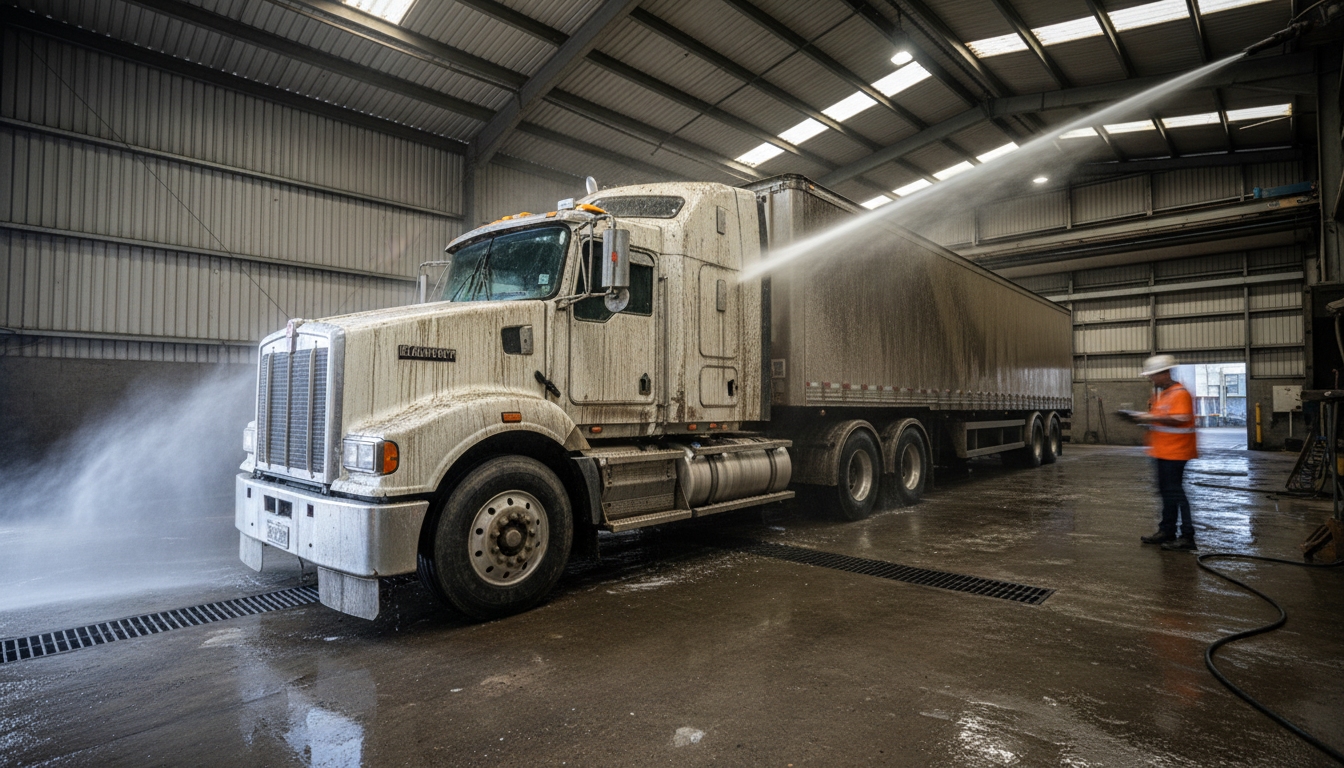
Operators preparing vehicles for RTA Wash services for Transport for NSW pre-inspection preparation must ensure that high-pressure cleaning reaches all areas subject to inspector scrutiny, including underbody components, wheel arches, fifth wheel assemblies, and brake systems. Surface washing that leaves chassis and suspension components contaminated does not meet Transport for NSW presentation standards and will result in inspection refusal.
When HVAIS Inspections Trigger Mandatory Cleaning
Several operational and regulatory events create mandatory cleaning requirements before Transport for NSW Heavy Vehicle Inspection Scheme assessments. Understanding these triggers allows fleet operators to schedule high-pressure washing proactively rather than facing inspection delays and re-presentation costs.
Industry Data
- —The Bureau of Infrastructure and Transport Research Economics (BITRE) reports that heavy vehicles operating in regional NSW cover an average of 87,000 km annually, with vehicles in construction and agriculture sectors accumulating significantly higher contamination levels requiring regular high-pressure cleaning to maintain inspection readiness.
Scheduled registration renewals for heavy vehicles operating under conditional registration or permit schemes require HVIS inspections. Vehicles that have operated in construction sites, quarries, agricultural properties, or unsealed roads between inspections typically accumulate mud, soil, and debris that must be removed before presentation. Similarly, vehicles involved in incidents requiring structural assessment or insurance evaluation need thorough cleaning to allow proper damage documentation and defect identification.
Fleet operators purchasing used heavy vehicles or transferring vehicles between operational roles should schedule high-pressure cleaning before pre-purchase inspections or compliance assessments. Hidden corrosion, structural damage, or mechanical wear often remains undetected under layers of accumulated grime, creating liability risks for both buyers and sellers under Chain of Responsibility obligations.
Vehicles returning from interstate operations or extended regional deployments require inspection-standard cleaning before re-entering scheduled maintenance cycles. Contamination from different road surfaces, climatic conditions, and operational environments can mask developing defects that require early intervention to prevent safety-critical failures.
Chain of Responsibility and Vehicle Presentation Standards
The Heavy Vehicle National Law (HVNL) Chain of Responsibility provisions extend compliance obligations beyond drivers to include operators, schedulers, loaders, and maintenance providers. When vehicle presentation prevents proper defect identification during inspections or routine maintenance, all parties in the chain may face penalties for failing to ensure vehicles remain in a safe and inspectable condition.
This shared liability structure means that inadequate cleaning becomes a compliance breach when it prevents mechanics, inspectors, or safety auditors from identifying structural damage, corrosion, brake wear, or suspension defects. Fleet operators who implement preventive maintenance strategies that reduce compliance risks must include regular high-pressure cleaning as part of their documented maintenance protocols to demonstrate due diligence under Chain of Responsibility requirements.
Work Health and Safety Act 2011 (NSW) obligations reinforce these requirements by mandating that employers provide safe working conditions for maintenance personnel. Mechanics and inspectors working on heavily contaminated vehicles face increased exposure to hazardous materials, reduced visibility of safety-critical components, and elevated injury risks from slips, falls, and contact with corrosive substances. Operators who fail to present vehicles in a clean, inspectable condition may breach WHS obligations in addition to HVNL compliance requirements.
Documented cleaning records serve as evidence of compliance diligence in the event of incidents, audits, or enforcement investigations. Fleet operators should maintain dated wash-down records that specify vehicle identification, cleaning scope, and inspector or mechanic sign-off confirming adequate presentation standards. These records demonstrate proactive compliance management and support Chain of Responsibility defences if defects are subsequently identified.
Contamination Control: Biosecurity and Cross-Border Compliance
The Biosecurity Act 2015 (Cth) creates additional mandatory cleaning requirements for heavy vehicles operating in declared biosecurity zones or crossing state borders. Vehicles transporting agricultural products, livestock, or operating in rural areas may be required to present wash-down certificates at inspection points to prevent the spread of soil-borne pests, diseases, and invasive species.
The National Heavy Vehicle Regulator (NHVR) recognises biosecurity compliance as part of Chain of Responsibility obligations for operators. Vehicles that cannot produce valid wash-down certificates when required face operational delays, quarantine holds, and potential penalties under both biosecurity and heavy vehicle legislation. High-pressure cleaning that removes soil, organic material, and plant matter from wheel arches, chassis components, and underbody areas is necessary to meet biosecurity certification standards.
Interstate operators must verify biosecurity requirements for destination states before departure. Queensland, South Australia, and Western Australia maintain active biosecurity inspection regimes that require documented evidence of vehicle cleaning before entry. Failure to comply results in mandatory on-site cleaning at operator expense, delayed delivery schedules, and potential biosecurity infringement notices.
Fleet operators should establish relationships with certified wash facilities that can provide compliant biosecurity cleaning and documentation. Eagle Truck Centre’s high-pressure cleaning services at Smeaton Grange and Emu Plains include underbody and chassis cleaning that meets biosecurity standards for cross-border operations, with documentation available for inspection point presentation.
High-Pressure vs Chemical Wash: Compliance Considerations
Transport for NSW inspection preparation requires high-pressure water cleaning capable of removing compacted mud, road grime, and operational residue from chassis rails, suspension components, and brake assemblies. Chemical washing alone—while effective for surface cleaning and corrosion prevention—does not provide the mechanical force necessary to dislodge hardened contamination from structural crevices, mounting points, and component interfaces.
Operators considering choosing between high-pressure wash and complete detailing for compliance purposes should prioritise mechanical cleaning over cosmetic finishing. Inspectors require visibility of structural welds, corrosion patterns, and component wear—outcomes achieved through high-pressure water application rather than chemical surface treatment.
Effective pre-inspection cleaning combines high-pressure water application with targeted chemical degreasing for brake assemblies, engine components, and fuel systems where oil and grease contamination obscures mechanical condition. This dual approach ensures that both structural and mechanical components meet Transport for NSW presentation standards without unnecessary cosmetic detailing that does not contribute to inspection outcomes.
Pre-Inspection Cleaning Checklist for NSW Operators
Fleet operators preparing vehicles for Transport for NSW Heavy Vehicle Inspection Scheme assessments should follow a systematic cleaning protocol that addresses all areas subject to inspector scrutiny. This checklist aligns with HVIS requirements and ensures vehicles meet presentation standards on first submission.
- ✓
Pressure-wash chassis rails, crossmembers, and suspension mounting points to expose structural welds, cracks, and corrosion for inspector assessment - ✓
Clean brake assemblies, slack adjusters, and air brake components to allow visual inspection of wear indicators and mechanical condition - ✓
Remove mud, soil, and organic material from wheel arches, mudguards, and underbody to meet biosecurity requirements for cross-border or zone-restricted operations - ✓
Wash fifth wheel assemblies, kingpin areas, and coupling mechanisms to enable inspection of wear patterns and locking mechanism integrity - ✓
Clean registration plates, VIN plates, and compliance plates to ensure all identification markings are legible during Transport for NSW inspections - ✓
Pressure-wash fuel tanks, exhaust systems, and mounting brackets to allow inspection for leaks, corrosion, and secure fastening - ✓
Remove chemical residues, salt buildup, or corrosive materials that accelerate component degradation and obscure early-stage defects - ✓
Document wash-down completion with dated records for Chain of Responsibility evidence and biosecurity certification requirements
Operators should integrate this checklist with their existing comprehensive truck maintenance checklist to ensure cleaning occurs at appropriate intervals before scheduled inspections, registration renewals, or compliance assessments. Documented completion of pre-inspection cleaning demonstrates proactive compliance management and reduces the risk of inspection refusal or defect notices.
Establishing a Compliance-Driven Wash Schedule
Effective fleet management requires scheduled high-pressure cleaning based on operational triggers rather than arbitrary time intervals. Vehicles operating in high-contamination environments need more frequent cleaning to maintain inspection readiness, while highway-only operations may require less intensive scheduling.
Construction and earthmoving operators should schedule high-pressure cleaning after each project completion or site rotation, before scheduled maintenance inspections, and prior to any Transport for NSW compliance assessments. Agricultural transport operators need cleaning after harvest season operations, before interstate movements requiring biosecurity certification, and following operations in declared pest management zones.
Waste and recycling fleet operators face elevated contamination from organic materials, chemical residues, and corrosive substances that accelerate component degradation. These operators should implement weekly or bi-weekly high-pressure cleaning schedules to prevent contamination buildup that obscures developing defects and creates WHS hazards for maintenance personnel.
Fleet operators should document cleaning schedules as part of their Heavy Vehicle National Law (HVNL) maintenance management systems. Scheduled cleaning records demonstrate compliance diligence during audits and provide evidence of proactive vehicle presentation management under Chain of Responsibility obligations. Integration with existing maintenance scheduling systems ensures cleaning occurs before inspection deadlines rather than as reactive responses to inspection refusals.
Operators seeking guidance on maintaining fleet cleanliness between compliance events can establish baseline cleaning frequencies based on operational environment, then adjust intervals based on actual contamination rates and inspection outcomes. This data-driven approach optimises cleaning costs while maintaining consistent compliance readiness.
Frequently Asked Questions: High-Pressure Truck Wash and Compliance
Does the Heavy Vehicle National Law require trucks to be clean for inspections?
The Heavy Vehicle National Law (HVNL) does not specify cleanliness standards, but Transport for NSW Heavy Vehicle Inspection Scheme requires vehicles to be presented in a condition that allows inspectors to assess structural integrity, corrosion, and component condition. Excessive dirt, mud, or grease can prevent proper inspection and result in a defect notice requiring re-presentation after cleaning.
When is high-pressure truck washing required before a TfNSW inspection?
High-pressure truck washing is necessary when chassis rails, suspension components, brake assemblies, or structural members are obscured by mud, road grime, or operational residue that prevents visual assessment during Heavy Vehicle Inspection Scheme (HVIS) inspections. Transport for NSW inspectors may refuse to inspect vehicles where dirt prevents identification of cracks, corrosion, or mechanical defects.
Can I be issued a defect notice for presenting a dirty truck at an inspection station?
Yes. Transport for NSW inspectors can issue a minor defect notice under the Heavy Vehicle Inspection Scheme if vehicle presentation prevents adequate inspection of safety-critical components. The vehicle must be cleaned and re-presented before a compliance certificate can be issued, delaying registration or permit approvals.
What biosecurity requirements trigger mandatory truck washing in NSW?
The Biosecurity Act 2015 (Cth) requires carriers to prevent the spread of soil-borne pests and diseases. Vehicles operating in declared biosecurity zones or crossing state borders may be required to present wash-down certificates at inspection points. The National Heavy Vehicle Regulator (NHVR) recognises biosecurity compliance as part of Chain of Responsibility obligations for operators.
How often should fleet operators schedule high-pressure truck washing for compliance?
Frequency depends on operational environment and regulatory triggers. Vehicles operating in construction, agriculture, or waste sectors should be washed before scheduled Transport for NSW inspections, after operating in biosecurity zones, and when chassis or underbody components require inspection for maintenance or incident investigation under Work Health and Safety Act 2011 (NSW) requirements.
Eagle Truck Centre provides RTA Wash services specifically designed for Transport for NSW pre-inspection preparation, with high-pressure cleaning that exposes chassis, suspension, and brake components for compliant assessment. Operating since 2015 across Smeaton Grange and Emu Plains, our team understands HVAIS requirements and delivers inspection-ready results.
24/7 mobile roadside assistance. Three locations across South West and Western Sydney. Operating since 2015.