Fleet managers across Sydney face a persistent challenge: maintaining brand presentation standards while managing operational costs and compliance obligations. Professional truck cleaning is not simply an aesthetic choice. It directly influences client perception, contract retention, and compliance outcomes under the Transport for NSW Heavy Vehicle Inspection Scheme. For transport operators servicing retail, FMCG, or construction clients, vehicle presentation communicates operational standards before the first pallet is delivered. The Australian Bureau of Statistics (ABS) reports over 600,000 registered heavy vehicles operating across Australia, with significant concentrations in NSW freight corridors serving Sydney’s logistics hubs. In this competitive environment, clean trucks differentiate professional operators from those treating vehicle presentation as an afterthought.
Why Professional Truck Cleaning Matters for Fleet Operators
Professional truck cleaning extends beyond removing surface dirt. It protects brand assets, supports regulatory compliance, and maintains resale value across fleet lifecycles. Transport operators relying on driver-applied cleaning methods or automated wash facilities designed for light vehicles consistently miss critical areas: chassis components, wheel arches, compliance plates, and signage edges. These overlooked areas accumulate grime that obscures structural integrity during inspections and degrades brand presentation during client-facing deliveries.
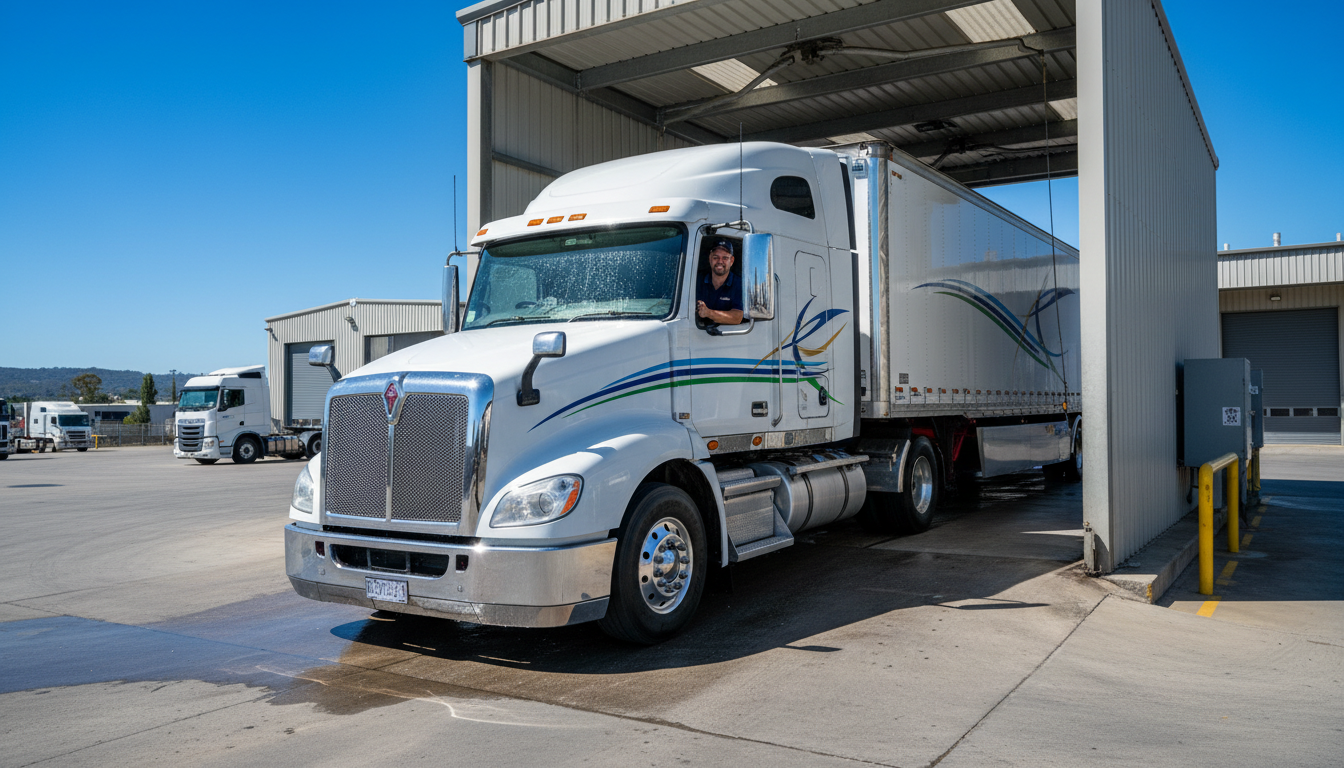
Eagle Truck Centre has delivered professional truck washing services across Sydney since 2015, supporting fleet operators who understand that vehicle presentation directly impacts business outcomes. Our Full Service Truck Wash, Complete Truck Detail, and RTA Wash services address different operational requirements: routine maintenance, high-profile branding, and Transport for NSW inspection preparation. Fleet managers selecting appropriate service levels based on client visibility and compliance schedules protect brand equity while controlling costs.
Professional cleaning also addresses Work Health and Safety Act 2011 (NSW) obligations. Operators must maintain vehicles in safe, roadworthy condition. Excessive dirt, chemical residue, or mud accumulation can obscure brake line leaks, suspension damage, or tyre sidewall cuts—defects that create safety risks and regulatory exposure. Regular professional washing enables early detection of maintenance issues before they escalate into costly repairs or roadside breakdowns.
How Clean Vehicles Support Compliance and Roadworthiness Standards
According to the National Heavy Vehicle Regulator (NHVR), vehicle presentation and cleanliness factor into roadworthiness assessments, as inspectors must be able to clearly identify compliance plates, load restraint points, and structural integrity. Transport for NSW Heavy Vehicle Inspection Scheme assessments require visual inspection of chassis rails, suspension mounting points, brake components, and tyre tread depth. Inspectors cannot complete these assessments when excessive dirt, mud, or chemical residue obscures critical components.
Fleet operators scheduling RTA Wash services for Transport for NSW inspections ensure compliance plates, registration labels, and NHVR accreditation markings remain clearly visible. This preparation reduces inspection delays and demonstrates operational professionalism to inspection officers. Operators who present clean vehicles for scheduled assessments signal attention to maintenance standards across their entire fleet.
Compliance extends beyond scheduled inspections. Roadside enforcement officers conducting random Heavy Vehicle National Law (HVNL) compliance checks assess vehicle condition, load restraint, and maintenance standards. Clean vehicles with visible compliance markings reduce inspection duration and demonstrate operator commitment to regulatory obligations. Conversely, vehicles with obscured identification plates or dirt-covered chassis components attract additional scrutiny and potential defect notices.
The Direct Link Between Fleet Presentation and Client Perception
Client perception forms within seconds of a delivery vehicle arriving on site. Retail distribution centres, construction projects, and manufacturing facilities evaluate transport operators based on vehicle presentation, driver professionalism, and on-time performance. Fleet presentation communicates operational standards before any freight handling occurs. Clean trucks with clear signage and well-maintained exteriors signal reliability, attention to detail, and professional management.
Transport contracts increasingly include vehicle presentation standards as performance criteria. Clients in food distribution, pharmaceutical logistics, and retail supply chains specify minimum cleanliness requirements for vehicles entering their facilities. These standards protect brand reputation and maintain site hygiene protocols. Operators failing to meet presentation requirements risk contract penalties, reduced allocation, or non-renewal at tender periods.
Industry Data
- —The Australian Bureau of Statistics (ABS) reports over 600,000 registered heavy vehicles operating across Australia, with significant concentrations in NSW freight corridors serving Sydney’s logistics hubs, creating intense competition for high-value transport contracts.
- —According to the National Heavy Vehicle Regulator (NHVR), vehicle presentation and cleanliness factor into roadworthiness assessments, as inspectors must be able to clearly identify compliance plates, load restraint points, and structural integrity during Heavy Vehicle National Law (HVNL) compliance checks.
Fleet branding investment loses value when vehicles operate with faded signage, dirt-covered logos, or grime-streaked panels. Professional cleaning protects signage investment and maintains brand visibility across every delivery route. Operators investing in vehicle wraps, magnetic signage, or painted branding must schedule regular professional cleaning to prevent premature fading and maintain colour consistency across fleet assets.
What Clean Trucks Communicate About Your Transport Business
Vehicle presentation communicates operational priorities to clients, competitors, and regulatory authorities. Clean trucks signal investment in asset maintenance, attention to compliance standards, and commitment to professional service delivery. These perceptions influence client contract decisions, tender evaluations, and long-term business relationships. Fleet managers who prioritise professional cleaning demonstrate that their operation values quality across all business functions.
Conversely, dirty trucks communicate cost-cutting priorities, maintenance neglect, and operational shortcuts. Clients observing poorly maintained vehicles question whether the same standards apply to freight handling, delivery schedules, and safety compliance. This perception damages business development efforts and undermines existing client relationships. Transport operators competing for premium contracts cannot afford to send mixed messages about operational standards through vehicle presentation.
Driver morale also responds to fleet presentation standards. Professional drivers operating clean, well-maintained vehicles report higher job satisfaction and stronger identification with their employer’s brand. This connection reduces driver turnover and supports recruitment efforts in tight labour markets. Fleet presentation becomes a retention tool when drivers recognise their employer’s commitment to professional standards.
Choosing the Right Truck Wash Service for Your Fleet’s Brand Standards
Fleet managers must match wash service levels to operational requirements and client expectations. Three primary service categories address different needs: RTA Wash for compliance preparation, Full Service Truck Wash for routine maintenance, and Complete Truck Detail for high-profile branding. Understanding when each service level delivers optimal value prevents overspending on unnecessary detailing while avoiding underinvestment that damages brand perception.
RTA Wash services prepare vehicles for Transport for NSW Heavy Vehicle Inspection Scheme assessments by thoroughly cleaning chassis components, suspension systems, brake assemblies, and compliance markings. This service ensures inspection officers can properly assess structural integrity and identify all required labels and plates. Fleet operators schedule RTA Wash before annual inspections, pre-purchase assessments, or following off-road operations that accumulate excessive mud or chemical residue.
Full Service Truck Wash addresses routine cleaning needs for general freight operators. This service removes road grime, diesel residue, and environmental contaminants from exterior surfaces while maintaining signage visibility and basic brand presentation. Fleets operating standard freight routes with moderate client visibility schedule Full Service Truck Wash fortnightly or monthly based on operating conditions and seasonal factors.
Complete Truck Detail delivers the highest presentation standards for fleets requiring premium brand visibility. This service includes exterior washing, signage cleaning, protective treatments, cab interior detailing, and chrome polishing. Operators servicing retail distribution centres, attending trade shows, or maintaining corporate fleet standards schedule Complete Truck Detail weekly or before high-profile client deliveries. Fleet managers benefit from choosing between detailing and high-pressure washing based on specific operational requirements and budget constraints.
Fleet Cleaning Schedules That Protect Your Brand
Effective fleet cleaning schedules balance brand protection with operational efficiency. Frequency depends on operating environment, client visibility, and contract requirements. High-profile fleets servicing retail or FMCG clients typically wash weekly to maintain consistent brand presentation. General freight operators wash fortnightly during dry conditions and weekly during wet weather when road spray accelerates grime accumulation.
Seasonal factors influence cleaning frequency across Sydney’s freight corridors. Summer dust storms, autumn leaf litter, winter rain, and spring pollen all impact vehicle presentation differently. Fleet managers adjust schedules based on weather patterns and route conditions. Operators running coastal routes face salt spray corrosion requiring more frequent washing than those operating exclusively on inland highways.
Contract-specific requirements override standard schedules. Transport agreements with food distribution centres, pharmaceutical manufacturers, or construction projects often specify minimum cleaning frequencies and presentation standards. Fleet managers must document compliance with these requirements through service records and photographic evidence. Eagle Truck Centre provides service documentation supporting contract compliance and client audit requirements for operators keeping Sydney fleets clean and compliant across multiple client contracts.
Route-based scheduling optimises efficiency for multi-vehicle fleets. Operators schedule washing when trucks return to depot between delivery cycles rather than interrupting operational schedules. Our Smeaton Grange location at 79 Hartley Rd, Smeaton Grange NSW 2567 and Emu Plains facility at 104 Russell St, Emu Plains NSW 2750 support fleet operators across South West and Western Sydney with convenient access to professional truck washing services that integrate into existing logistics schedules.
Maintaining Fleet Presentation Between Professional Washes
Professional washing establishes baseline presentation standards, but drivers must maintain appearance between scheduled services. Simple daily practices prevent minor issues escalating into brand damage. Drivers conducting pre-start inspections should wipe down signage, clean mirrors, and remove obvious dirt from cab doors and steps. These quick actions maintain professional appearance during client-facing deliveries without requiring full washing services.
Spot cleaning addresses specific contamination before it sets. Bird droppings, tree sap, chemical spills, and insect residue damage paint and signage when left unattended. Drivers carrying microfibre cloths and spray bottles can address these issues immediately rather than waiting for scheduled washing. This proactive approach protects brand assets and prevents permanent staining that requires professional correction.
Fleet managers benefit from practical guidance on maintaining truck appearance between professional washes that drivers can implement during routine operations. These interim measures extend professional cleaning investment and maintain consistent brand presentation across delivery schedules. Operators providing drivers with basic cleaning supplies and clear presentation expectations achieve better outcomes than those relying solely on scheduled washing services.
Cab interior maintenance also influences client perception. Drivers meeting clients at delivery points represent the entire business. Clean cabs with organised paperwork, minimal personal items, and maintained upholstery reinforce professional standards established by exterior presentation. Fleet managers should include cab interior standards in driver training and performance evaluations.
Integrating Truck Wash into Your Fleet Maintenance Program
Professional truck cleaning functions as preventative maintenance rather than cosmetic service. Regular washing enables early detection of structural damage, corrosion, fluid leaks, and component wear that dirty vehicles conceal. Fleet managers integrating washing into broader maintenance programs reduce total cost of ownership by identifying issues before they escalate into major repairs or roadside failures.
Scheduled washing aligns naturally with other maintenance intervals. Operators combining truck wash with tyre inspections, brake assessments, and fluid service create efficient maintenance cycles that minimise vehicle downtime. Eagle Truck Centre supports this integrated approach at our Smeaton Grange and Emu Plains locations, where fleet operators access professional truck washing and comprehensive tyre services during single service appointments. Our 24/7 mobile roadside assistance also supports urgent tyre requirements when vehicles cannot return to depot for scheduled maintenance.
Documentation requirements under the Heavy Vehicle National Law (HVNL) and National Heavy Vehicle Regulator (NHVR) maintenance standards benefit from integrated service records. Fleet managers maintaining comprehensive maintenance logs that include washing schedules, tyre inspections, and mechanical service demonstrate systematic asset management during compliance audits and client reviews. This documentation supports operator accreditation applications and contract tender submissions requiring evidence of maintenance standards.
Fleet managers should reference a comprehensive truck maintenance checklist that positions professional cleaning within broader preventative maintenance planning. This systematic approach ensures washing receives appropriate priority alongside mechanical service, tyre maintenance, and compliance inspections. Operators treating vehicle presentation as integral to maintenance strategy achieve better asset utilisation and longer vehicle lifecycles than those viewing cleaning as discretionary expense.
- ✓
Schedule professional truck wash services aligned with client delivery schedules and high-visibility routes - ✓
Ensure company signage, logos, and contact details are clearly visible and free from dirt, grime, or fading - ✓
Clean compliance plates, registration labels, and NHVR accreditation markings before Transport for NSW inspections - ✓
Remove mud, chemical residue, and road grime from chassis and suspension components to support roadworthiness assessments - ✓
Maintain cab interiors to reflect the same brand standards as exterior presentation - ✓
Document fleet cleaning schedules as part of maintenance records for client audits and contract compliance - ✓
Use RTA Wash services before scheduled Heavy Vehicle Inspection Scheme assessments to ensure all components are visible
Frequently Asked Questions
How often should commercial fleets schedule professional truck washing?
Fleet washing frequency depends on operating conditions and client visibility. High-profile fleets serving retail or FMCG clients typically wash weekly, while general freight operators wash fortnightly or monthly. Transport for NSW requires vehicles to be clean enough for inspection officers to assess structural integrity and compliance markings during Heavy Vehicle Inspection Scheme assessments. Seasonal factors also influence schedules, with wet weather requiring more frequent washing due to increased road spray and grime accumulation. Operators should adjust frequency based on route conditions, client contract requirements, and brand presentation standards.
Does a clean truck affect Transport for NSW inspection outcomes?
Yes. Transport for NSW Heavy Vehicle Inspection Scheme requires inspectors to visually assess chassis, suspension, braking components, and compliance plates. Excessive dirt, mud, or grime that obscures critical components or identification markings can delay inspections or result in defect notices until the vehicle is cleaned and re-presented. The National Heavy Vehicle Regulator (NHVR) expects operators to maintain vehicles in a condition that allows proper assessment of roadworthiness. Clean vehicles demonstrate operational professionalism and facilitate efficient inspection processes, reducing downtime and administrative burden.
What truck wash service is best for maintaining fleet branding?
Complete Truck Detail services maintain the highest brand presentation standards, including cab interior, signage cleaning, and protective treatments. Full Service Truck Wash suits regular maintenance schedules for branded fleets operating standard freight routes. RTA Wash is specifically designed for Transport for NSW pre-inspection preparation, ensuring compliance markings and structural components are visible. Fleet managers should match service levels to client visibility requirements and contract specifications. High-profile fleets servicing retail or corporate clients benefit from Complete Truck Detail, while general freight operators achieve adequate brand protection through Full Service Truck Wash scheduled at appropriate intervals.
Can dirty trucks impact client contract renewals?
Fleet presentation directly influences client perception of operational standards. Clients in retail, food distribution, and construction sectors often include vehicle presentation standards in transport contracts. Consistently clean, well-maintained trucks signal reliability, professionalism, and attention to detail—factors that support contract retention and renewal. Conversely, poor vehicle presentation raises questions about maintenance standards, safety compliance, and operational priorities. Transport operators competing for premium contracts must demonstrate professional standards through every client interaction, including vehicle appearance at delivery points. Documentation of regular professional cleaning supports contract compliance and tender submissions requiring evidence of fleet maintenance programs.
Eagle Truck Centre has delivered professional truck cleaning and tyre services across Sydney since 2015. Our Full Service Truck Wash, Complete Truck Detail, and RTA Wash services support fleet branding and Transport for NSW compliance at our Smeaton Grange and Emu Plains locations.
24/7 mobile roadside assistance. Three locations across South West and Western Sydney. Operating since 2015.