Industry Data
- —According to the National Heavy Vehicle Regulator (NHVR), 23% of heavy vehicle defect notices issued in NSW relate to chassis and structural components that require clean presentation for proper inspection.
- —Transport for NSW data shows that vehicles presented for Heavy Vehicle Inspection Scheme assessments in poor cosmetic condition face 34% longer inspection times due to additional cleaning requirements.
- —The Bureau of Infrastructure and Transport Research Economics (BITRE) reports that Australian heavy vehicle operators spend an average of $2,400 annually per vehicle on cleaning and presentation services.
- —SafeWork NSW incident data indicates that inadequate cleaning of chemical transport vehicles contributed to 17 workplace exposure incidents in NSW transport operations during 2022-2023.
Fleet managers and owner-operators across Greater Sydney face a recurring decision: when does a vehicle require Complete Truck Detailing versus standard fleet cleaning. The distinction is not merely cosmetic. Under the Heavy Vehicle National Law (HVNL) Chain of Responsibility obligations, operators must maintain vehicles in a condition that allows proper inspection of safety-critical components. Transport for NSW Heavy Vehicle Inspection Scheme assessments require chassis, suspension, and brake components to be visible and assessable, which standard cleaning cannot always achieve. Eagle Truck Centre has provided Complete Truck Detailing and fleet cleaning services across South West and Western Sydney since 2015, servicing operators who need to balance operational efficiency with compliance readiness.
The cost difference between these services is substantial, but so are the consequences of choosing incorrectly. According to the Bureau of Infrastructure and Transport Research Economics (BITRE), Australian heavy vehicle operators spend an average of $2,400 annually per vehicle on cleaning and presentation services. Understanding when each service is required protects that investment and ensures vehicles meet regulatory expectations when it matters most.
What Complete Truck Detailing Involves
Complete Truck Detailing is a comprehensive restoration process that addresses every accessible surface of a heavy vehicle. Unlike Complete Truck Detailing vs High Pressure Truck Wash comparisons that focus on surface cleaning, true detailing includes chemical degreasing of the chassis, acid washing of aluminium components, steam cleaning of the undercarriage, polishing of painted surfaces, and restoration of rubber and plastic trim. The process targets corrosion, embedded road grime, chemical residues, and biological contamination that accumulate over months of operation.
For compliance purposes, detailing ensures that brake lines, suspension mounting points, chassis rails, and structural welds are visible for inspection. Transport for NSW Heavy Vehicle Inspection Scheme assessors must be able to identify cracks, corrosion, and fatigue without obstruction. According to the National Heavy Vehicle Regulator (NHVR), 23% of heavy vehicle defect notices issued in NSW relate to chassis and structural components that require clean presentation for proper inspection. Detailing removes the barriers to that assessment.
The process also addresses occupational health requirements. SafeWork NSW incident data indicates that inadequate cleaning of chemical transport vehicles contributed to 17 workplace exposure incidents in NSW transport operations during 2022-2023. Complete Truck Detailing with chemical wash protocols meets Work Health and Safety Act 2011 (NSW) obligations for decontamination before maintenance or disposal.
What Fleet Cleaning Covers in Standard Operations
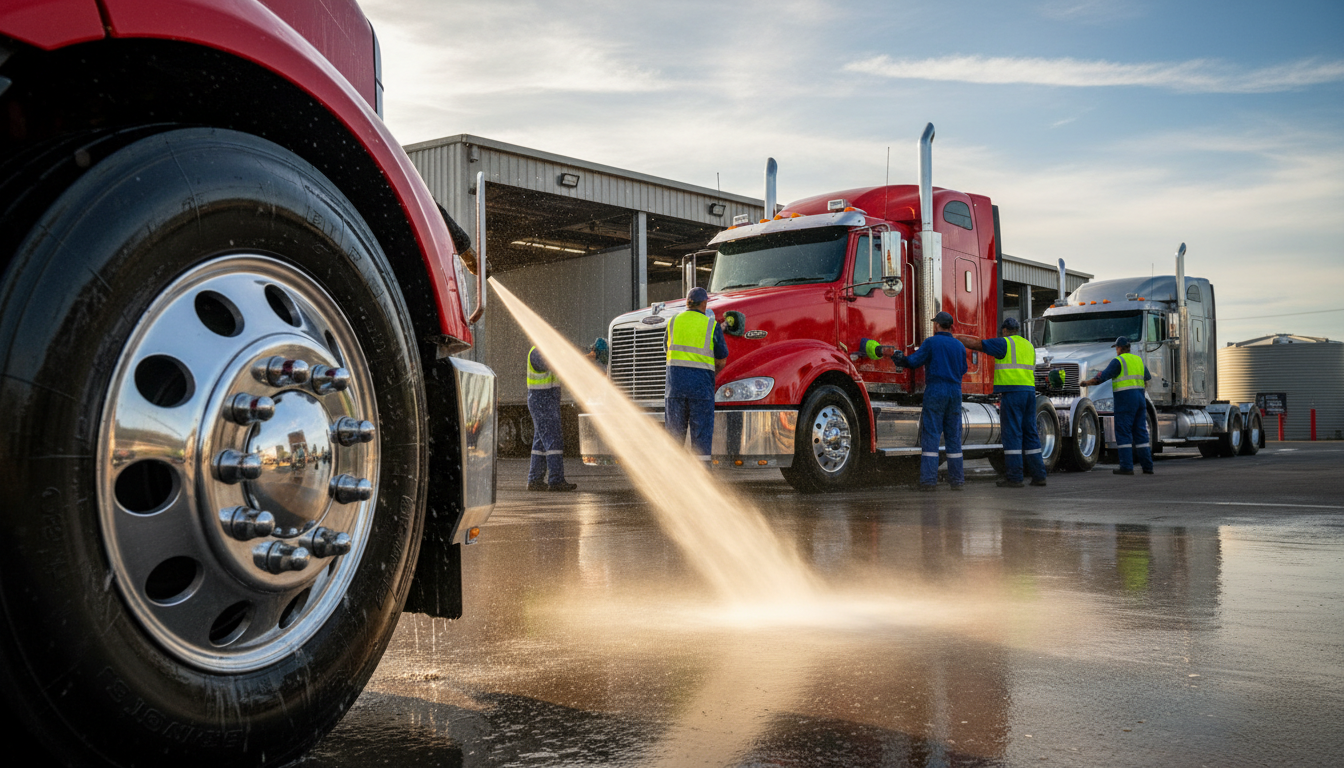
Standard fleet cleaning addresses operational dirt, road grime, and surface contaminants that accumulate during normal use. High-pressure washing removes mud, dust, and loose debris from external panels, wheels, and accessible undercarriage areas. The service maintains professional appearance, prevents corrosive buildup in coastal or mining environments, and supports driver morale by providing clean working equipment.
Fleet cleaning does not typically include chemical degreasing, acid washing, or detailed attention to chassis components. It is designed for frequency rather than depth, with most NSW operators scheduling weekly or fortnightly washes depending on operating environment. The service keeps vehicles presentable and prevents the kind of neglect that accelerates corrosion, but it does not restore vehicles to inspection-ready condition if significant contamination has accumulated.
For operators maintaining fleet cleanliness and compliance standards between major inspections, regular fleet cleaning is the foundation. It prevents the buildup that would otherwise require detailing, but it cannot substitute for comprehensive cleaning when regulatory or commercial requirements demand it.
When Complete Truck Detailing Is Required for Compliance
Complete Truck Detailing becomes mandatory in specific regulatory and operational scenarios. Before scheduled Transport for NSW Heavy Vehicle Inspection Scheme assessments, vehicles must be presented clean enough for thorough structural inspection. Transport for NSW data shows that vehicles presented for Heavy Vehicle Inspection Scheme assessments in poor cosmetic condition face 34% longer inspection times due to additional cleaning requirements. Operators who schedule RTA Wash services for Transport for NSW inspections ensure vehicles meet presentation standards without delay or rejection.
Following incidents or near-misses, National Heavy Vehicle Regulator (NHVR) compliance audits may require detailed photographic documentation of vehicle condition. Detailing ensures that chassis numbers, compliance plates, and structural components are clearly visible for regulatory photography. The service also becomes necessary when vehicles have been operating in chemically contaminated environments, transporting dangerous goods, or working in biological waste operations where Work Health and Safety Act 2011 (NSW) decontamination obligations apply.
For vehicles approaching major service intervals where suspension, brake, or steering components will be disassembled, detailing protects workshop staff from exposure to accumulated contaminants. This is both a SafeWork NSW requirement and a practical necessity for accurate mechanical assessment.
When Fleet Cleaning Is Sufficient for Operational Maintenance
Standard fleet cleaning meets the needs of vehicles in regular service between compliance milestones. For line-haul operators running sealed highways, fortnightly high-pressure washing prevents corrosive salt accumulation in coastal zones and maintains professional presentation for client sites. Urban delivery fleets operating in metro Sydney typically schedule weekly cleaning to address traffic film and maintain brand visibility.
Fleet cleaning is sufficient when vehicles are not subject to imminent inspection, when operating environments are relatively clean, and when previous detailing has established a baseline of cleanliness. The service maintains that baseline without the cost or downtime of comprehensive detailing. Operators who implement consistent fleet cleaning schedules reduce the frequency with which full detailing becomes necessary, spreading maintenance costs more predictably across the financial year.
For vehicles with recent compliance inspections and no upcoming regulatory requirements, fleet cleaning protects the investment in previous detailing work. It prevents the rapid deterioration that occurs when vehicles are neglected between major services, extending the interval before the next comprehensive detail is required.
Pre-Sale and Asset Disposal: Why Detailing Is Non-Negotiable
Complete Truck Detailing before asset disposal is not optional for operators seeking market value. Buyers assess vehicle condition based on visible presentation, and neglected exteriors suggest neglected maintenance. Detailing removes the evidence of hard use, exposes the true condition of structural components, and allows accurate pre-sale mechanical inspection.
The process also fulfills vendor disclosure obligations. Selling a vehicle with concealed structural corrosion or undisclosed contamination creates liability under consumer protection law. Detailing ensures that buyers can conduct informed pre-purchase inspections, protecting vendors from future disputes. For vehicles being returned to lease companies or sold at auction, presentation standards directly affect residual value calculations.
Chemical transport vehicles require decontamination certificates before sale or disposal. Complete Truck Detailing with chemical wash protocols provides the documentation required to transfer ownership without ongoing liability for contamination. This is particularly critical for tankers, tippers that have carried agricultural chemicals, and service vehicles that have operated in industrial environments.
Cost-Benefit Analysis: Detailing vs Regular Fleet Cleaning
The economic case for each service depends on operational context. Fleet cleaning costs less per service but requires higher frequency, while Complete Truck Detailing represents a larger single investment with longer intervals between services. For a 10-vehicle fleet operating in urban Sydney, weekly fleet cleaning costs approximately $800-$1,200 monthly across the fleet. Quarterly detailing for the same fleet adds $3,000-$8,000 per quarter depending on vehicle size and condition.
The return on detailing investment appears in avoided inspection delays, improved resale values, and reduced compliance risk. Transport for NSW data shows that vehicles presented for Heavy Vehicle Inspection Scheme assessments in poor cosmetic condition face 34% longer inspection times due to additional cleaning requirements. For operators managing tight inspection schedules, that delay translates directly to lost revenue. The professional truck washing benefits extend beyond appearance to operational efficiency.
Operators who neglect regular fleet cleaning face accelerated detailing costs. Vehicles that receive no interim cleaning between annual inspections require more intensive detailing to achieve inspection-ready condition. The false economy of skipping routine cleaning results in higher total annual expenditure when comprehensive restoration becomes necessary.
How to Schedule Detailing and Fleet Cleaning for Maximum Efficiency
- 01
Establish baseline cleaning frequencySchedule fleet cleaning weekly for urban operations, fortnightly for highway line-haul, and after every shift for vehicles operating in corrosive or contaminated environments. This prevents the buildup that necessitates emergency detailing.
- 02
Schedule detailing around compliance milestonesBook Complete Truck Detailing minimum 48 hours before Transport for NSW Heavy Vehicle Inspection Scheme assessments to allow proper drying and final pre-inspection checks. Coordinate with inspection booking systems to avoid last-minute scheduling conflicts.
- 03
Implement quarterly detailing for high-value assetsPrime movers, late-model equipment, and vehicles with corporate branding benefit from quarterly detailing regardless of inspection schedules. This maintains resale value and prevents the kind of neglect that becomes expensive to reverse.
- 04
Document all cleaning servicesMaintain records of both fleet cleaning and detailing services to demonstrate Heavy Vehicle National Law (HVNL) Chain of Responsibility compliance with maintenance obligations. Include dates, service provider, and photographic evidence for National Heavy Vehicle Regulator (NHVR) audit purposes.
Operators keeping your truck clean between professional services through driver-performed interim cleaning extend the interval between paid services. Simple practices such as hosing wheel arches after operating in muddy conditions, wiping down external lights, and removing debris from chassis rails reduce the workload when professional cleaning is scheduled.
Eagle Truck Centre operates facilities at Smeaton Grange NSW 2567 and Emu Plains NSW 2750 with drive-in availability for both fleet cleaning and Complete Truck Detailing. Scheduling services at consistent intervals allows operators to plan downtime around operational demands rather than reacting to last-minute inspection requirements.
Checklist: Determining Which Service Your Fleet Needs
- ✓
Assess vehicle presentation requirements: compliance inspection, routine operation, pre-sale, or post-chemical transport - ✓
Check Transport for NSW Heavy Vehicle Inspection Scheme notice for specific cleanliness standards if inspection is scheduled - ✓
Evaluate chassis, undercarriage, and brake component visibility — detailing required if structural elements cannot be properly inspected - ✓
Review fleet cleaning frequency against operational environment — increase frequency for vehicles operating in corrosive coastal or mining environments - ✓
Schedule Complete Truck Detailing minimum 48 hours before HVAIS inspections to allow proper drying and final checks - ✓
Document all detailing and fleet cleaning services to demonstrate maintenance compliance under Heavy Vehicle National Law (HVNL) Chain of Responsibility obligations - ✓
Inspect for chemical residue, biological contamination, or hazardous material traces requiring specialized chemical wash services - ✓
Budget quarterly detailing for high-value assets and weekly fleet cleaning for operational vehicles to balance cost and presentation standards
This checklist integrates with broader comprehensive truck maintenance checklist protocols, ensuring that cleaning services align with mechanical maintenance schedules and regulatory compliance milestones.
Common Mistakes Fleet Managers Make When Choosing Between Services
The most frequent error is delaying detailing until inspection notices arrive. Transport for NSW Heavy Vehicle Inspection Scheme bookings often provide only 7-14 days notice, insufficient time to schedule comprehensive detailing if service providers are fully booked. Operators who wait until the last moment face either rushed cleaning that does not meet inspection standards or rescheduled inspections that disrupt operational schedules.
Another common mistake is assuming that fleet cleaning can substitute for detailing through increased frequency. While more frequent washing prevents some buildup, it cannot remove embedded contamination, chemical residues, or corrosion that requires specialized treatment. Operators who double their fleet cleaning frequency instead of scheduling periodic detailing waste money on services that cannot achieve the required outcome.
Fleet managers also underestimate the documentation value of professional cleaning services. Under Heavy Vehicle National Law (HVNL) Chain of Responsibility obligations, operators must demonstrate reasonable steps to maintain vehicles in safe condition. Documented cleaning schedules provide evidence of systematic maintenance practices during National Heavy Vehicle Regulator (NHVR) audits or following incidents. Operators who rely on informal or undocumented cleaning cannot demonstrate compliance when required.
Finally, some operators choose service providers based solely on price without considering compliance capability. Not all truck wash facilities understand Transport for NSW Heavy Vehicle Inspection Scheme presentation requirements or have the equipment and chemicals necessary for proper decontamination. Choosing the cheapest option often results in vehicles that still fail to meet inspection standards, requiring repeat services at additional cost.
Frequently Asked Questions About Truck Detailing and Fleet Cleaning
Does Transport for NSW require truck detailing before HVAIS inspections?
Transport for NSW Heavy Vehicle Inspection Scheme requires vehicles to be presented clean enough for inspectors to assess structural integrity, brake components, and chassis condition. While not mandating ‘detailing’ specifically, the National Heavy Vehicle Regulator (NHVR) expects operators to ensure vehicles are sufficiently clean for thorough safety inspections under the Heavy Vehicle National Law (HVNL). Inspectors may refuse to assess vehicles where dirt, grease, or contamination prevents proper examination of safety-critical components.
How often should I schedule complete truck detailing versus regular fleet cleaning?
Most NSW fleets schedule regular fleet cleaning weekly or fortnightly to maintain operational presentation and prevent corrosive buildup. Complete Truck Detailing is typically required quarterly, before compliance audits, pre-sale inspections, or when vehicles require deep cleaning to meet Transport for NSW Heavy Vehicle Inspection Scheme presentation standards. Operating environment significantly affects frequency — vehicles in coastal zones or mining operations require more frequent attention due to accelerated corrosion.
Can fleet cleaning remove chemical residue from tanker operations?
Standard fleet cleaning addresses road grime and operational dirt but cannot safely remove hazardous chemical residues. Complete Truck Detailing with chemical and acid wash services is required for tankers transporting dangerous goods, ensuring compliance with Work Health and Safety Act 2011 (NSW) requirements and National Heavy Vehicle Regulator (NHVR) load restraint and contamination standards. Specialized decontamination protocols include proper chemical neutralization, waste disposal, and certification documentation for regulatory purposes.
What is the cost difference between truck detailing and fleet cleaning in Sydney?
Fleet cleaning typically costs between $80-$150 per vehicle for standard rigid trucks, while Complete Truck Detailing ranges from $300-$800 depending on vehicle size and condition. The investment in detailing is justified when preparing vehicles for sale, compliance audits, or when addressing neglected maintenance that could affect Transport for NSW inspection outcomes. Operators should budget approximately $2,400 annually per vehicle for combined cleaning and detailing services according to Bureau of Infrastructure and Transport Research Economics (BITRE) industry data.
Eagle Truck Centre has provided Complete Truck Detailing and fleet cleaning services across South West and Western Sydney since 2015. Our Smeaton Grange and Emu Plains facilities offer RTA Wash services, chemical wash, and full detailing to meet Transport for NSW inspection standards. Contact us to schedule the right service for your fleet’s compliance and operational needs.
24/7 mobile roadside assistance. Three locations across South West and Western Sydney. Operating since 2015.