Industry Data
- —According to the National Heavy Vehicle Regulator (NHVR), operators must ensure vehicles comply with roadworthiness standards under the Heavy Vehicle National Law (HVNL), which includes maintaining structural integrity that can be compromised by corrosion from unwashed contaminants.
- —Transport for NSW conducts over 50,000 heavy vehicle inspections annually through its Heavy Vehicle Inspection Scheme, with presentation condition directly affecting inspection efficiency and pass rates.
- —The Bureau of Infrastructure and Transport Research Economics (BITRE) reports that heavy vehicle corrosion costs the Australian transport industry an estimated $3.5 billion annually in repairs, downtime, and premature vehicle replacement, much of which is preventable through regular washing and maintenance.
Professional truck wash Sydney services form a critical component of heavy vehicle fleet management across NSW, directly affecting compliance outcomes, asset longevity, and operational costs. Fleet managers and owner-operators operating in Greater Sydney face unique challenges from coastal salt exposure, construction site contaminants, and industrial chemical residues that accelerate corrosion and compromise structural integrity when left unaddressed. Regular professional washing protects vehicles from premature deterioration while ensuring presentation standards required for Transport for NSW Heavy Vehicle Inspection Scheme assessments.
Why Regular Truck Washing Is Critical for NSW Fleet Operations
Under the Heavy Vehicle National Law (HVNL), operators carry a legal obligation to maintain vehicles in a roadworthy condition. While the legislation does not explicitly mandate washing frequency, it requires operators to ensure structural components remain free from deterioration that could compromise safety. Accumulated contaminants including road salt, industrial chemicals, concrete residue, and organic materials create conditions for accelerated corrosion of chassis rails, cross members, suspension mounts, and brake components.
According to SafeWork NSW, employers must maintain plant and equipment in safe working condition under the Work Health and Safety Act 2011 (NSW). For heavy vehicle operators, this includes preventing corrosion-related structural failures that could endanger drivers, maintenance personnel, and other road users. Regular washing removes corrosive agents before they penetrate protective coatings and initiate metal degradation.
Fleet vehicles operating in Sydney’s coastal suburbs face particularly aggressive corrosion from airborne salt particles. Vehicles servicing construction sites accumulate alkaline concrete dust and cement residues that bond to painted surfaces and aluminium panels. Those transporting bulk materials or operating in industrial zones encounter chemical contaminants requiring specialized cleaning beyond standard water washing. Eagle Truck Centre has serviced Sydney’s heavy vehicle operators since 2015, providing targeted wash solutions for diverse operating environments across South West and Western Sydney.
RTA Wash Requirements for Transport for NSW Heavy Vehicle Inspections
Transport for NSW inspectors require vehicles presented for Heavy Vehicle Inspection Scheme assessments to be sufficiently clean for proper examination of safety-critical components. While not a formal legal requirement under the HVNL, inadequate vehicle cleanliness can result in inspection refusal, causing scheduling delays and additional costs for operators. RTA wash services for Transport for NSW inspections specifically prepare vehicles to meet these presentation standards.
Inspectors must visually assess brake system components, steering linkages, suspension bushings, chassis rail condition, and structural welds. Excessive mud, grease buildup, or road grime obscures defects including stress cracks, corrosion perforation, and component wear. An RTA wash ensures undercarriage components, wheel assemblies, and chassis structures are visible for thorough assessment. This specialized service includes high-pressure cleaning of chassis rails, degreasing of brake assemblies, and removal of accumulated material from suspension components.
Fleet managers should coordinate RTA wash scheduling with inspection bookings to maintain compliance readiness. For operators managing multiple vehicles, establishing a pre-inspection wash protocol reduces last-minute scheduling conflicts and ensures consistent presentation standards. Understanding what to expect during a Transport for NSW HVAIS inspection helps operators prepare vehicles appropriately.
Types of Truck Wash Services Available in Sydney
Heavy vehicle wash services range from basic exterior cleaning to comprehensive chemical treatments addressing specific contamination types. Fleet managers must match service selection to vehicle operating conditions, cargo types, and maintenance objectives.
Operators benefit from understanding the distinction between these service levels when choosing between detailing and high-pressure washing for specific fleet requirements. Basic washing addresses routine maintenance needs, while chemical and acid treatments resolve contamination that standard washing cannot remove.
Chemical and Acid Wash for Heavy Soiling and Corrosion Prevention
Vehicles operating in construction, mining, and industrial environments accumulate contaminants requiring chemical intervention beyond mechanical water pressure. Concrete residue bonds chemically to painted surfaces and aluminium panels, creating a substrate for moisture retention and accelerated corrosion. Oil and grease deposits trap corrosive particles against metal surfaces, initiating pitting corrosion beneath the contamination layer.
Chemical wash services employ alkaline degreasers that emulsify hydrocarbon deposits, breaking molecular bonds between contaminants and substrate surfaces. These solutions penetrate into crevices, drainage channels, and chassis rail interiors where pressure washing alone cannot reach. For concrete agitators and tipper bodies, acid washing dissolves mineral deposits and cement buildup using controlled pH solutions that remove contamination without damaging underlying metal or protective coatings.
Fleet managers should specify chemical or acid wash services based on cargo type and operating environment. Vehicles transporting bulk cement, lime, or mineral products require periodic acid treatment to prevent buildup that adds unnecessary weight and conceals structural deterioration. Those operating in industrial zones with airborne chemical contaminants benefit from quarterly chemical washing that removes corrosive residues before they penetrate paint systems. For comprehensive guidance on maintaining fleet condition, review information on keeping your fleet clean and compliant.
How Often Should You Wash Your Heavy Vehicle Fleet
Wash frequency depends on operating environment, cargo type, and exposure to corrosive agents. According to SafeWork NSW, operators must maintain vehicles in safe condition, which includes removing contaminants that may compromise structural integrity or visibility. Fleet managers should establish washing schedules based on operational risk factors rather than arbitrary time intervals.
Vehicles operating in coastal areas within 5 kilometres of saltwater require weekly to fortnightly washing to prevent salt-induced corrosion of chassis components, brake assemblies, and electrical connections. Those servicing construction sites accumulate alkaline dust and mud requiring bi-weekly cleaning to prevent concrete bonding and drainage channel blockage. Linehaul vehicles operating primarily on sealed highways in inland areas may extend washing intervals to monthly, provided regular visual inspections confirm no excessive contamination.
Cargo type significantly influences washing requirements. Vehicles transporting corrosive chemicals, bulk minerals, or organic materials require immediate post-trip washing to prevent cargo residue from initiating corrosion during idle periods. Refrigerated vehicles need regular exterior cleaning to maintain thermal efficiency and prevent biological growth around door seals and ventilation systems. Practical advice on maintaining truck cleanliness between professional washes helps operators extend service intervals without compromising asset protection.
Why Regular Truck Washing Protects Your Fleet Investment
The Bureau of Infrastructure and Transport Research Economics (BITRE) reports that heavy vehicle corrosion costs the Australian transport industry an estimated $3.5 billion annually in repairs, downtime, and premature vehicle replacement. A significant portion of this cost stems from preventable corrosion that regular washing would mitigate. Chassis rail perforation, cross member deterioration, and suspension mount corrosion typically originate from accumulated contaminants retained in drainage channels and structural crevices.
Professional washing removes corrosive agents before they penetrate protective coatings and initiate electrochemical corrosion processes. High-pressure water reaches into chassis rail interiors, clearing drainage holes that prevent water accumulation. Chemical treatments dissolve residues that trap moisture against metal surfaces, eliminating the electrolyte layer necessary for corrosion cell formation. Regular washing also enables early detection of paint damage, allowing operators to address coating failures before underlying metal exposure occurs.
Fleet vehicles maintained with consistent washing schedules demonstrate measurably better condition during pre-sale inspections and command higher prices in the used heavy vehicle market. Buyers recognize well-maintained chassis rails, clean suspension components, and intact protective coatings as indicators of overall fleet care. The benefits of professional truck washing extend beyond immediate appearance to long-term asset value preservation.
Pre-Wash Inspection Checklist for Fleet Managers
Effective fleet washing programs integrate inspection protocols that identify maintenance requirements and optimize service outcomes. Fleet managers should implement standardized pre-wash assessments that document vehicle condition and guide service selection.
- ✓
Remove all loose debris, mud, and material buildup from chassis, wheel arches, and undercarriage before professional washing - ✓
Inspect and clear drainage holes in chassis rails and cross members to prevent water accumulation and accelerated corrosion - ✓
Check that all external lights, reflectors, and number plates are visible and clean for roadworthiness compliance - ✓
Document wash dates and service types in fleet maintenance records for Transport for NSW inspection preparation - ✓
Schedule RTA wash 24-48 hours before scheduled Transport for NSW heavy vehicle inspections to ensure adequate presentation - ✓
Identify vehicles requiring chemical or acid wash based on cargo type, operating environment, and visible heavy soiling - ✓
Inspect painted surfaces, aluminium panels, and stainless steel components for early signs of corrosion after each wash - ✓
Coordinate wash schedules with tyre inspections and routine maintenance to maximize operational efficiency and minimize downtime
Integrating washing with broader preventive maintenance programs maximizes efficiency and reduces vehicle downtime. Fleet managers should reference a comprehensive truck maintenance checklist when developing integrated service schedules that address multiple maintenance requirements during single service appointments.
Choosing a Truck Wash Provider in South West and Western Sydney
Fleet managers selecting wash service providers should evaluate facility capabilities, service range, and location convenience relative to operational routes and depot locations. Providers offering multiple service levels from basic washing through specialized chemical treatments enable operators to consolidate services with a single vendor, simplifying scheduling and billing administration.
Facility location significantly affects operational efficiency. Wash providers situated along major freight routes reduce deadhead travel and enable drivers to incorporate washing into regular trip patterns. Those offering extended operating hours or 24-hour access accommodate diverse fleet schedules without disrupting delivery commitments. For operators managing inspection schedules, proximity to Transport for NSW inspection stations reduces coordination complexity when preparing vehicles for assessment.
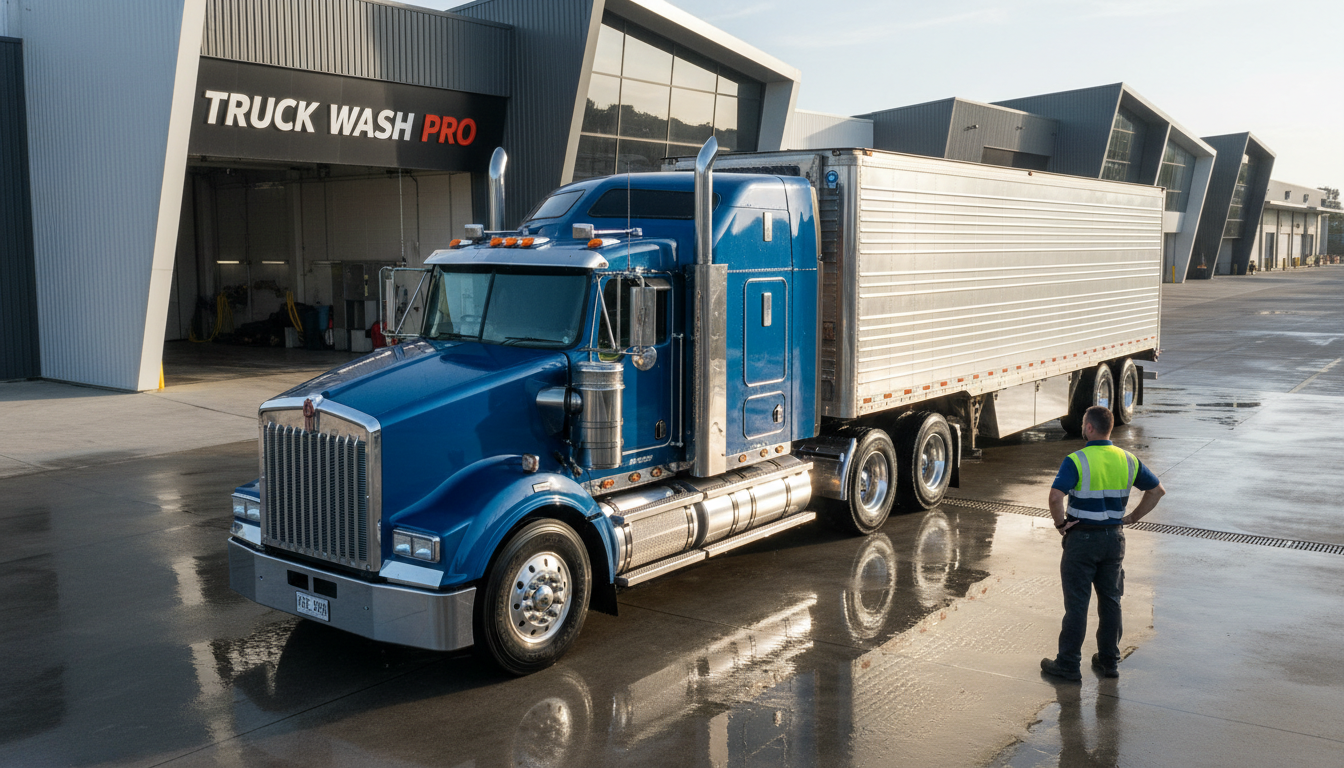
Eagle Truck Centre operates dedicated truck wash facilities at Smeaton Grange NSW 2567 (79 Hartley Rd) and Emu Plains NSW 2750 (104 Russell St), providing comprehensive wash services including RTA wash, chemical cleaning, and complete detailing for South West and Western Sydney operators. Both locations offer drive-through accessibility for articulated combinations and accommodate fleet scheduling for operators managing multiple vehicles. With over 10 years servicing Sydney’s heavy vehicle operators since 2015, the facilities provide specialized equipment and trained personnel familiar with Transport for NSW inspection presentation requirements.
Fleet managers should verify that wash providers maintain appropriate environmental management systems for wastewater treatment and chemical disposal. Under NSW environmental protection legislation, commercial truck wash operations must capture and treat wastewater to prevent contaminated runoff entering stormwater systems. Operators using compliant facilities avoid potential liability issues associated with environmental violations.
Frequently Asked Questions About Truck Wash Services in Sydney
Do I need an RTA wash before a Transport for NSW heavy vehicle inspection?
While not legally mandated under the Heavy Vehicle National Law (HVNL), Transport for NSW inspectors require vehicles to be presented clean enough to assess structural integrity, brake components, and chassis condition. An RTA wash ensures mud, grease, and road grime don’t obscure defects during inspection, reducing the risk of a failed assessment.
How often should I wash my heavy vehicle fleet in Sydney?
Frequency depends on operating environment and cargo type. Vehicles operating in coastal areas, construction sites, or transporting corrosive materials should be washed weekly to fortnightly to prevent accelerated corrosion. According to SafeWork NSW, operators must maintain vehicles in safe condition, which includes removing contaminants that may compromise structural integrity or visibility.
What’s the difference between a basic truck wash and a chemical wash?
A basic high-pressure wash removes surface dirt and mud using water and standard detergents. Chemical and acid washes use specialized solutions to dissolve heavy soiling, oil residues, concrete buildup, and corrosive materials that standard washing cannot remove. Chemical washes are essential for vehicles transporting bulk materials, operating in mining environments, or requiring deep degreasing before mechanical inspections.
Can dirty trucks fail a roadworthiness inspection in NSW?
Yes. Under the Transport for NSW Heavy Vehicle Inspection Scheme, inspectors may refuse to assess a vehicle if excessive dirt prevents proper examination of safety-critical components including brake systems, steering linkages, chassis rails, and suspension mounts. Operators risk inspection delays and additional costs if vehicles are presented inadequately cleaned.
Does regular truck washing help with resale value?
Regular professional washing significantly protects resale value by preventing corrosion, paint degradation, and structural deterioration. Fleet vehicles maintained with consistent washing schedules demonstrate better condition during pre-sale inspections and command higher prices in the used heavy vehicle market, particularly for prime movers and trailers operating in harsh NSW coastal and industrial environments.
Eagle Truck Centre has provided professional truck wash services across South West and Western Sydney since 2015, with RTA wash, chemical cleaning, and complete detailing available at Smeaton Grange and Emu Plains locations. Contact us for fleet wash scheduling and pre-inspection preparation.
24/7 mobile roadside assistance. Three locations across South West and Western Sydney. Operating since 2015.